

Good morning!
A few weeks ago I mentioned that I’d experiment with the format of these newsletters, and one feature I’d like to start this week is recommended reading. There are a few reasons I launched this site, and to be completely honest here, one is that without a forcing function to think critically and read and write at length, I worry that recording podcasts, reading tweets and watching short-form video might slowly lobotomize me. So, in the spirit of avoiding that fate and celebrating good writing, here are five recommendations from this week:
- Playing Poker with Ty Lue. A wonderful essay from Stephen Noh on playing poker professionally, the Chauncey Billups gambling scandal, and close encounters with Clippers coach Ty Lue.
- What Inflation Does to Society. A pretty harrowing 10-minute reflection from Josh Brown, including the observation that inflation does more damage to social stability than recessions do.
- The Future of Nation-States. Janan Ganesh extrapolates from the Mamdani win to wonder about the future of Western countries if geographically distributed polarity is going to be permanent. This one was harrowing, too!
- The CCP’s Useful Idiots. A great little Substack riff from Robert Atkinson, and fun context as Hasan Piker makes his way around Beijing this week.
- R.I.P. to the Penny. I didn’t realize the U.S. government stopped minting pennies this week until seeing this obituary from the New York Times, which reminded me of a rollicking magazine feature from Caity Weaver at the New York Times last fall. Read them both! And mourn the penny, even though it was (long past) time to say goodbye.
Also: If you have questions or topics you’d like to see addressed in a future newsletter, you can email me here. Now, onto the main topic this week.
We’ll focus on basketball today, and let me start here: I don’t hate the NBA Cup.
Damning with faint praise, sure, but it’s sincere. Each of the past two years, I’ve complained about this tournament, I’ve suggested ways to improve this tournament, and by the end, I found myself appreciating that for one week in December, the entire basketball ecosystem focuses on three basketball games across the Cup semifinals and final. My take for now is that the current version of the Cup is, narrowly, 1 better than nothing.
More importantly, something like this should exist. The NBA season starts off with a bang and then immediately fades to the margins of the mainstream sports conversation, leaving hardcore fans to immerse themselves in an ocean of regular season games that don’t matter very much. Assuming the league is never going to shorten the regular season to 60 games and start every season on Christmas Day, an early-season tournament is a fun way to occupy those fans for the first trimester, with an outside chance of attracting mainstream attention. It can work.
It can definitely work better than it does now. Last Friday night—a “Cup Night” in the NBA’s words—saw 11 matchups decided by an average margin of 21 points in games that were forgotten as soon as they happened. Last month I heard one of my favorite basketball podcasts “preview” the Cup, and the host had to preface the discussion by admitting that he doesn’t care about the event and finds it contrived and annoying.
For anyone reading who’s unfamiliar with what’s happening here: The NBA Cup is described by the league as “the league’s annual in-season tournament, which provides players and teams with another competition to win, engages fans in a new way and drives additional interest in the early portion of the regular-season schedule.” It was created two years ago as part of an effort to sell a skinnier rights package that would go to a third TV partner. In that respect, it’s already a success. This year’s NBA Cup knockout round will be broadcast exclusively on Prime Video, which is paying the NBA $1.9 billion per year for the next 10 years.
That’s why we’re here today. There are ways to make this event a lot more compelling over the next 10 years, and in the interim, I’d also argue that the Cup in its current form is a useful a window into the ways the modern NBA is lost as a more general matter. The branding is a mess, even players have no idea why it matters, nobody pays attention to the standings until the final night of group play, and even then, interest is marginal. Rather than at least rely on nostalgia and history to elevate the tournament with fans — the Kobe Bryant Cup? the Stern Cup? — the league sold the branding rights to Emirates, as part of a “layered, multiyear marketing partnership that also makes Emirates the official global airline of the league and its first referee jersey patch partner.” Rather than devising competitive stakes that would get teams, fans and media invested, the league offers bonuses to the players to incentivize them to play hard. And rather than hold the league accountable for creating an event that has failed to resonate and may not have any real reason to exist (but for the Amazon money), what’s left of the NBA media is mostly mum or politely sarcastic, content to ignore the implications of a pretty big swing that has mostly missed.
To me, the lesson of all this is clear: the modern league office is much better selling basketball to advertisers and TV partners than to fans. But it doesn’t have to be that way forever. So, in case anyone at the league or Amazon is listening, let me offer two fixes: one that’s obvious and simple, and one that’s more radical.
The Courts Have to Go (And Brand Integrity Matters)

It would be reductive to argue that 30 garish courts are the sole reason nobody takes the Cup seriously, but I’m tempted, and it can’t help the Cup’s cause if millions of basketball fans associate this tournament with a gimmick that makes the games harder to watch. The league, for its part, explains that each Cup game occurs on a court that’s “rooted in the home team’s core color.” And as you can see above, the Nuggets’ core color is… magenta? Alright then.
The NBA chose these courts in an effort to differentiate Cup play from the rest of the regular season. It’s an understandable goal, but the cure is worse than the disease. Here’s more from the league, from the Washington Post last year:
“[NBA Commissioner Adam Silver’s] vision of creating a vehicle to separate these games from all other games was certainly brilliant,” said Christopher Arena, the NBA’s head of on-court and brand partnerships. “How do we double down on that? Having the courts continue to be painted made a lot of sense.”
… “However polarizing [the painted courts] might have been, it was mission accomplished,” designer Victor Solomon told the Washington Post last year. “They made a statement and [gave viewers] a visceral reaction to what you were watching. … If you’re causing conversation, it’s not necessarily the worst thing in the world.”
That is a remarkably shortsighted way to view marketing. And here, I’ll reiterate that the Cup is a keystone to understanding lots of failures of the Adam Silver era, one of which has been a tendency to conflate social media conversation about the league with real, meaningful resonance. Increasing brand awareness is not positive if it comes at the expense of preserving the integrity of the brand itself.
So yes, the courts are a bad idea first and most obviously because of the UX issues cited in the tweet above: If you’re a basketball league, don’t make it more annoying for fans to watch basketball.
More than that, though, those courts represent a lack of confidence in the NBA product and a lack of ambition for the event the league’s trying to sell. It’s like the folks at the league office conceded that nobody would care about the tournament itself, so they settled for generating tweets about how much everyone hates the courts. For reference, Boise State and Eastern Washington play on blue and football fields, and that makes sense to me; they are Boise State and Eastern Washington. The NBA is the best basketball league in the world, with 78 years of goodwill among American fans, and many of the most famous superstars in all of sports.
If the league wants to succeed with something new, it should build on what’s already successful. Lean into the history and brands that have powered a $76 billion business with fans all over the world. What we’ve gotten instead is every team playing on a court that’s loudly unrecognizable, and every home team wearing their “Nike NBA Statement Edition” jerseys, which change every year.2 It’s corporate insanity. For example, the Warriors are the most successful brand the NBA has launched this century, with Steph jerseys popular all over the world. Next Friday, they’ll host a Cup game wearing generic black jerseys no one’s ever seen before and playing on a court that’s inexplicably gray and black (again: would like to learn more about who’s choosing the “core colors” here).
This shouldn’t be that hard. Play on normal hardwood floors that make the games familiar and easy to follow. Have teams wear throwback uniforms from 30 years ago (everybody knows and loves them) instead of one-off Nike jerseys that are foreign to even diehard fans. Differentiate the look of these games by putting a giant cup trophy in the middle of every court, like the old NBA Finals logos. This approach would be tasteful, distinct, and as the years pass and fans begin to care about who wins the NBA Cup, seeing the trophy at center court could make these games feel like a real, elevated event, especially by the knockout round.
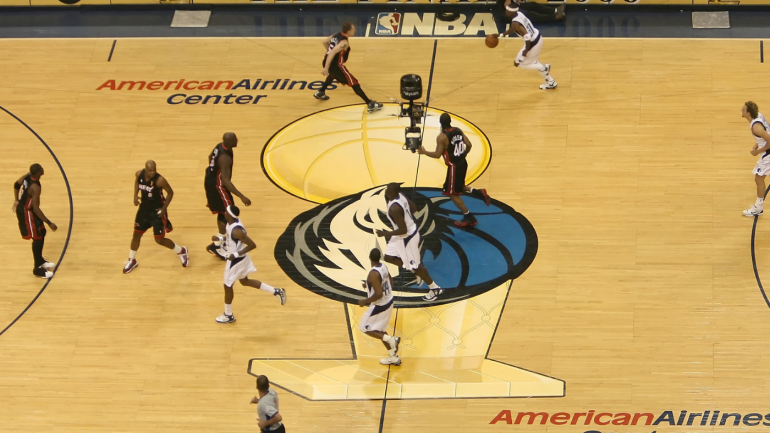
That brings us the second solution. Abandoning the “core color” courts would make the Cup less embarrassing, but that only gets the league back to neutral. How do you move the needle in a positive direction?
Give Teams — And Fans — A Reason to Invest
The winner of the NBA Cup should get the number one pick. The runner-up should get the fifth pick. The teams who lose in the semifinals should get the 10th and 15th pick, with the order to be determined by point differential in the semifinal games, thereby making the Group Stage and early knockout rounds more dramatic. And each of those first round picks should accrue to the winning teams in addition to the picks they already have, so that going forward, the first round will have 34 picks.3
Here, again, the NBA should sell this tournament by relying on aspects of its business that are already working. The “core color” courts were conceived to generate social media conversation, you say?
Well, what actually drives an amazing amount of organic social media conversation is a year-round obsession with team-building: draft picks, trades, and highlights of 18 year-old players that could potentially be the face of a new generation. Today’s NBA media keeps tabs on draft prospects all year long, and most fans are already familiar with the names Darryn Peterson and A.J. Dybansta. Leaning into that interest is a no-brainer. The league could generate meaningful competitive stakes for its midyear tournament, which, in turn, would be covered extensively across new and old media, all of which would elevate the profile of teams that make it to the Final Four, as well as the college stars those teams are competing to draft. A few of those players will then go to good, nationally relevant teams that will headline the Cup in future years. In Stratechery parlance, I believe this is called a flywheel.
The core problem with the Cup is that when someone asks why the tournament exists, or why the winner matters, no one has a good answer. It’s not clear teams treat these games any differently, and fans certainly don’t. One of the first things I heard about this tournament was an announcement that the league would distribute an additional $18 million in salary among the teams that advance to Vegas. The purse for players has gone up each year, but three years later, I’m still baffled the league launched this event by leading with a concerted effort to incentivize players, but zero competitive implications for NBA organizations, and no real reason for fans to invest in the outcome.
Imagine if, a month from now, the Pistons and Thunder are playing in the Cup Final with a chance at the number one pick on the line. Detroit is currently on an eight-game winning streak and would be at the end of Cinderella run in that scenario. The number one pick would be an opportunity for Cade Cunningham, Ausar Thompson, and Jalen Duren to add one, more truly elite running mate and become a perennial title contender for the next 5-7 years. Or, they could win the first pick and trade it for a superstar like Lauri Markkanen (along with additional firsts from Utah) and use that to springboard them to title contention for the remainder of this season. Either way, the implications for that team would be massive, and an upset win would take an enjoyable-but-marginal story in Detroit this year and turn the Pistons into one of the biggest stories in sports.
Or, say OKC wins. The Thunder were the most dominant team in the league last year, they look even more dominant this season, and they still have an embarrassment of draft pick riches to fill out their roster as the nucleus gets more expensive the next several years. How unfair and infuriating would it be for Presti, Shai, and Jalen Williams to end up with the literal number one pick? How much distance does that put between the OKC dynasty and the rest of the league over the next decade? And how much fun would America have rooting against the Thunder not only in the Cup Final, but for the rest of the decade (if they win)?
Even before you get that far, putting extra first round picks on the table would juice the end of group play and have the entire NBA community paying attention.4 For example, did you know the Toronto Raptors are currently 2-0, and leading “East Group A” in the Cup standings? Probably not! Because that distinction is completely meaningless. But add in a chance at an extra top 15 pick — 1, 5, 10, or 15 — and Raptors fans consigned to rooting for a play-in team all year would have reason to go all in rooting for RJ Barrett and Scottie Barnes to make a run to Vegas.
Others in media have addressed Cup apathy by suggesting the league guarantee home court advantage in the playoffs for the Cup winner, or by making Cup wins worth more in the standings than regular season games. The problem with those sorts of proposals is that fans wouldn’t really care about those stakes, it’s not clear that teams would alter their behavior all that much, either, and finally, adopting either approach would further jeopardize the integrity of a regular season that’s already starved for meaning. Let’s not do that.
The draft, though? The number one pick went to the Mavs last year, rewarding an organization that had just made one of the most unforgivable trades in the history of sports. The Draft already has no integrity, and more often than not, it sends great players to dysfunctional organizations that don’t deserve them. Upending that system is fine, and almost certainly a net positive for the league.
Addressing the Skeptics in the Room
The draft pick idea has been met with a few objections when I’ve mentioned on podcasts in the past, so let me address four common refrains.
Objection #1: “Players won’t play hard to get a draft pick that could replace them.” This makes some intuitive sense, but that’s not really how the league works anymore. Roster turnover is incredibly high in the current CBA environment, most role players understand they’re replaceable, and every high stakes game they play is effectively an advertisement for their next deal or next team. As for the superstars, if players like Giannis Antetokounmpo or Nikola Jokic have a chance at extending their title window by acquiring a number a top five pick that can be used on a potential superstar or traded for one, they’d be crazy not to be 100% invested (or, as the skeptics fear, to tank the games for fear of being replaced?). The key here is that draft pick incentives would be valuable enough to make entire organizations care about the Cup way more than they do today. Stars, the coaching staff, the GM, even owners… If there’s a chance to secure the number one pick, organizations will eventually treat these games like playoff games.
Objection #2: “Casual fans don’t care about draft picks.” First, the casual sports fans in my life don’t currently know the NBA Cup exists, so the league has nothing to lose on this front. Second, are we sure casual fans wouldn’t pay attention? No sport has ever decided its number one pick in a game before. The way players respond to the stakes would be a subplot unto itself, and because the stakes are genuinely important to the best teams in the league, old and new media would cover the Cup non-stop and without apology (unlike the podcaster I mentioned at the top). And, as an added bonus, if the league wants this event to acquire any kind of historical heft, tying wins to franchise-altering good fortune goes a long way toward accomplishing that goal. If the Nuggets were to win the number one pick at next month’s Cup Final, the first seven years of Dybantsa’s career in Denver will remind fans of how much fun they had on that Cup run, and the Cup highlights be run back constantly by media if/when he ascends.
Objection #3: “Sir, this is a Wendy’s. The Cup is not important enough to justify upending how the league does business, or even writing this now-2,5000 word column.” Fair, and I apologize. But hold that first thought!
Objection #4: “Rewarding Cup winners with lottery picks destroys parity and sabotages the pipeline for small markets to acquire superstars.” See, this looks like a bug, but it’s actually the feature that makes these changes most appealing to me.
Parity Is Great for the Cup and Bad for the League
Silver and others with the league have explained the lack of competitive stakes for the NBA Cup by citing English soccer tournaments that have attained meaning of their own, independent of the Premier League championship. This analogy ignores about 150 years of history imbuing those tournaments with meaning,5 as well as fewer games across a soccer regular season, thereby making additional games more compelling.
Speaking of the season, though, the reason the Cup exists, apart from the Amazon deal, is the league’s correct assessment that fan attention wanes across 82 games and six months, especially during football season. That kind of apathy is bad for business. Silver’s office has tried to solve this problem structurally, with the tournament, and systematically, through a new CBA that has made it harder for teams to aggregate star talent and created a landscape with 20 pretty good teams as opposed to three or four great teams. The thinking is that a leveled playing field gives more teams a realistic shot at a title, and gives fans a reason to stay invested. Here, the NBA’s trying to emulate not English football, but American football.
The problem, again, is structure. The NFL has an 18-week regular season and one game per week; using parity to explain the popularity of league is a mistake. Football is the best sport for television in the history of the world, there are limited windows to watch, and the NFL ends the year with a single-elimination playoff. Of course those games draw massive audiences.6 The NBA, meanwhile, has to capture attention across nine months, including 82 games of the regular season and two-and-a-half months of seven-game playoff series. Parity, in that structural context, just renders most teams forgettable and interchangeable.
Ironically, this is the area where soccer has the solution. Superteams work great in soccer. Fans watch them all year long, hate them or love them, and when two great teams play one another, the world stops.
That’s not altogether different than how the NBA has succeeded across time, yet the league has run the other direction from the first 75 years of its history. Instead, and without parsing too many CBA specifics here, Silver’s regime has instituted a CBA environment that would render it close to impossible to keep the Jordan Bulls dynasty together in the modern era, and would likewise short-circuit attempts to recreate LeBron’s Heat or Cavs teams or the Warriors dynasty. Apart from how frustrating the CBA restrictions have become for fans of playoff teams who now watch their favorite teams turn over half their roster every two years, it’s stunning that anyone thought this was a good idea from a business perspective.
Which brings us back to the Cup. Make no mistake: if the league were to adopt my plan, winning the Cup or even advancing to the Final would be a massive long-term competitive advantage for Cup winners. Maybe that feels too random. But is it really preferable to preserve a status quo in which many of the league’s best players are stranded on teams that have no flexibility to improve the roster? Do we really need 15 teams at the top of the league that are pretty good, not great, and ultimately forgettable?
Using this tournament to award to give top 10 picks to some of the best teams in the league wouldn’t solve the parity problem overnight, but it would be a step in the right direction. First of all, a handful of the best young players would go to playoff teams each June, putting them in a better position to learn, succeed and play high-stakes basketball earlier in their career. That’s better for the NBA overall. Second, bad teams would still have plenty of bites at the apple throughout the Lottery (OKC’s big three was drafted at nos. 2, 12, and 11). And third, the best teams would be afforded more high-end talent to fill out their roster (and/or tools to make more immediate upgrades), which ultimately improves the product at the very top of the league. And finally, those upgrades would happen in a perfectly equitable way: won on the court, fair and square! This wouldn’t be KD going to the Warriors because the players’ union wouldn’t smooth the cap; no one could fault a good team that became even better after it went undefeated in Cup Games that the whole world watched, and wound up with Darryn Peterson at the end. And how many fans would be sitting at home wishing that Peterson went to Brooklyn instead?
Yes, maybe OKC wins the next 8 Cups and next 8 titles in this scenario, and they turn into greatest dynasty of the century, but even that would create a wonderful villain to root against and give everyone a historic team to watch. Alternatively, this is still is a single-elimination tournament where anything can happen. Parity emerges organically in this context. That’s part of the fun! So maybe OKC dominates in perpetuity, but it’s more likely that a team like the Nuggets or Wolves adds the number one pick and levels the playing field with Sam Presti and his mountain of assets for the rest of the decade; or maybe a team like the Pistons, Raptors, Magic or Knicks could shock the world, add a future superstar, and help the East reclaim some dignity.
I’m spitballing at this point,7 but the most important takeaway is that each of those scenarios is a hundred times more compelling than the Lakers or Bucks winning the past two Cups, and announcers telling us that each player just earned an extra $500,000. There is a smarter way to do this. Now that the Emirates and Amazon contracts are signed, putting some thought into making people care about this event, and taking some risks, could make the Cup so much better for fans.
And maybe it’s not a coincidence if that approach would also be better for the league’s business.
Sharp Text is extension of the Stratechery Plus podcasts Sharp Tech, Greatest of All Talk, and Sharp China. We’ll publish once a week, on Fridays. To subscribe and receive weekly posts via email, click here.
- The Cup in its current iteration is not cost-free. In addition to an assault on the eyes every Friday night for the first six weeks of the season, the tournament is awfully disruptive to the rest of the regular season schedule, leading to lots of early season back-to-backs and and an uptick in blowouts and sloppiness, as observed by Ryen Russillo a few years ago (starts at 17:00). ↩︎
- I checked, and the inexplicable Nike Statement Edition uniforms that change every year are distinct from the Nike City Edition uniforms, which also change every year. Don’t get me started. ↩︎
- Listeners will know I’ve floated a version of this idea on Greatest of All Talk in each of the past two years, pushing for the winner of this tournament to get a top five pick (specifically: the fifth best lottery odds, and a chance at number one). I realize now that my previous idea was too nerdy and technocratic, and that I was suffering from the same problem as the league itself: trying to make the Cup work, without really leaning into it. ↩︎
- Likewise, deciding the 10th and 15th pick by single-game point differential could make for some great theater in the semifinals. ↩︎
- The FA Cup began more than a century before the Premier League was founded. ↩︎
- And, parity aside, the most popular football teams of the century are the Chiefs and Patriots. ↩︎
- While I’m here: Move the Cup Final Four from Las Vegas, where they tip games at 3:30 and 6:00 pm locally and atmospheres have been dreadful each year. Play the game in New York City, full of hoops fans from all over the country, and do it at Madison Square Garden, the best stage the NBA has. Sell tickets to a raucous double-header on Saturday night, and play the finals at 8:30 P.M. the following Monday. But OK, OK. I’m leaving the Wendy’s now. ↩︎